

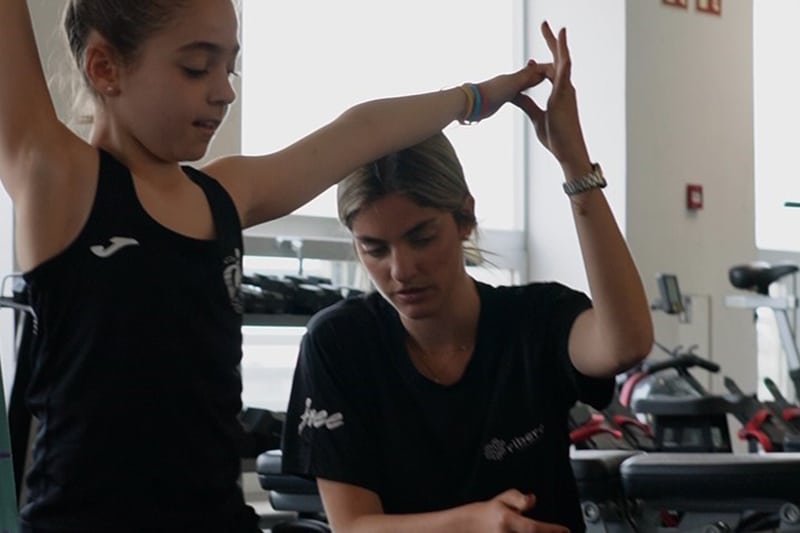
- The Ribera Imske Gymnastics Sports Unit develops preventative strategies adapted to the demands of disciplines such as rhythmic, artistic, acrobatic or aesthetic gymnastics
- Experts warn that many common gymnastics injuries could be avoided through specific assessments and individualized programs.
Behind every gymnastics injury, as in other disciplines, there are often warning signs that appear long before the athlete has to stop training. Strength deficits, recurring pain, limited mobility, muscle imbalances, or technical errors can increase the risk of injury without the gymnast or those around them being fully aware of it.
For this reason, more and more specialists argue that prevention should be as important as treatment in the daily lives of gymnasts. And this is one of the lines of work of the new Gymnastics Disciplines Unit from the hospital Imske River.
Gymnastics is one of the most demanding sports in terms of flexibility, coordination, power, and body control. These characteristics mean that certain structures, such as the lumbar spine, ankles, knees, and hips, are subjected to a high level of stress over years of practice.
According to Mireya Esteban, head of the Gymnastics Sports Unit at Ribera Imske, “many of the injuries that appear in adolescence begin to develop much earlier.” “In many cases, we observe strength deficits or altered movement patterns that can be corrected before they cause an injury. The earlier they are detected, the greater the chances of preventing future problems,” she points out.
This highly specialized unit performs specific functional assessments to identify risk factors and design preventive programs tailored to the needs of each athlete and discipline.
Furthermore, prevention is not limited to the athlete. It also includes advising families, coaches, and clubs to optimize training loads and promote balanced physical development.
Dr. Sergio Calvache, coordinator of Sports Medicine at the Ribera Imske hospital, emphasizes that this preventative approach “is especially important during the growth stages of gymnasts, when the body undergoes constant changes and may be more vulnerable to certain overuse injuries.”
With this philosophy, the Ribera Imske Gymnastics Sports Unit is committed to a model that not only seeks to recover from injuries, but also to help gymnasts develop their sporting career in a safer and healthier way.


