
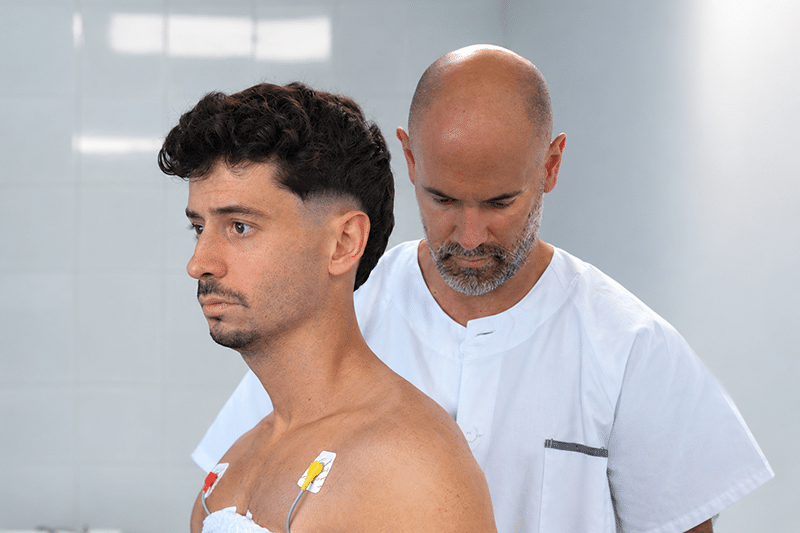
- Dr. Sergio Calvache, pulmonologist, graduate in Sports Science and coordinator of Sports Medicine at the hospital Imske RiverbankHe warns that some heart conditions remain hidden until the body makes an effort.
- Experts point out that a sports check-up can prevent injuries, detect risk factors, and avoid serious outcomes such as sudden death associated with sports.
More and more people are regularly taking up sports and participating in local races, cycling events, or amateur competitions. However, feeling good and performing well doesn't guarantee that there aren't underlying health problems that could surface during periods of intense physical exertion.
Dr. Sergio Calvache, sports coordinator and pulmonologist at Ribera Imske Hospital, emphasizes that the absence of symptoms does not equate to the absence of risk. "A person can be perfectly healthy at rest and discover a pathology when they subject their body to the stress of intense physical exercise," he explains.
The main concern of specialists is the prevention of potentially serious cardiovascular problems. Therefore, sports medicine guidelines recommend undergoing a medical evaluation before starting or significantly increasing physical activity, especially in athletes who train regularly.
According to the specialist from Ribera Imske, sports medical examinations allow for the detection of cardiac abnormalities that might go unnoticed in a conventional check-up, as well as the identification of risk factors related to muscle and joint injuries. "What concerns us doctors most is screening for sudden cardiac death associated with sports, but also injury prevention and understanding the individual physiology of each athlete," he points out.
The importance of evaluating the athlete under exertion
One of the fundamental differences between a conventional medical examination and a sports check-up is that the latter analyzes the body's response during exercise.
"A patient may present certain arrhythmias or alterations that never appear at rest and only manifest themselves when the heart is working at high intensities," explains Dr. Calvache.
At Ribera Imske, a highly specialized hospital for musculoskeletal disorders and injuries, the evaluation includes a clinical interview, family history review, physical examination, electrocardiogram, cardiopulmonary examination, and advanced stress tests, among other diagnostic tools. These tests allow doctors to understand how the body responds to exercise and detect any underlying abnormalities.
A recognition that saved a life
The specialist particularly recalls the case of a seemingly healthy young athlete who came to the clinic after a medical examination prevented him from taking a competitive exam. "During the examination, we detected a significant heart problem that required open-heart surgery. The patient was completely asymptomatic and exercised normally. This case demonstrates that performing well or feeling well doesn't always mean being healthy," he states.
Warning signs that should never be ignored
Experts warn that certain symptoms should prompt us to immediately stop physical activity and seek medical evaluation. These include chest pain or pressure during exertion, dizziness or fainting, abnormal heart palpitations, disproportionate shortness of breath, exercising with a fever, or the appearance of very dark urine after extreme exertion.
"If you notice any of these signs, you should stop and consult a doctor. Prevention remains the best way to enjoy sports safely," concludes Dr. Calvache.